Galla Placidia
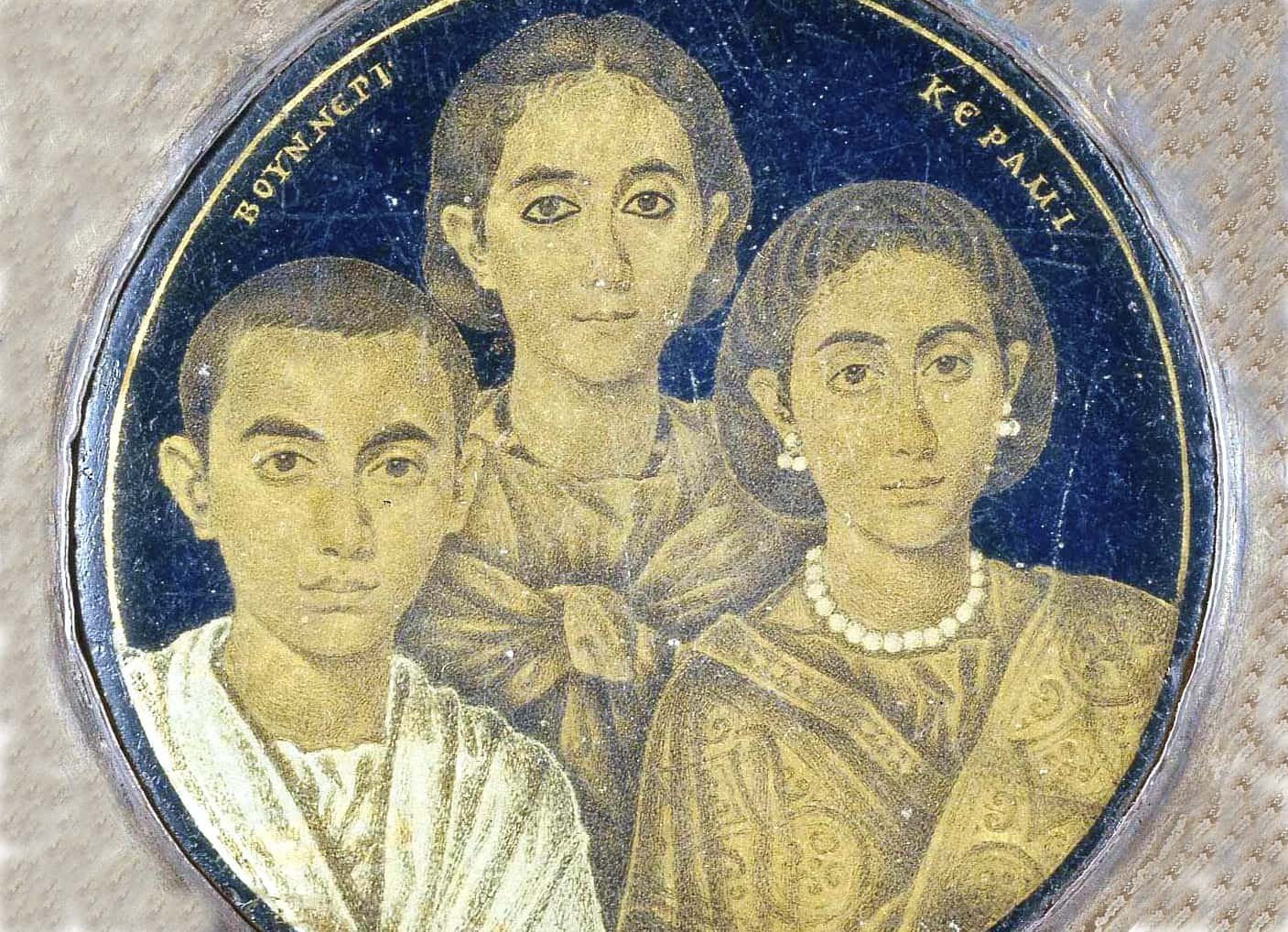
The Fifth-Century Empress Who Lived Through Enough Drama for Three Seasons of Real Housewives
Every historical period has that one person whose biography is so chaotic it sounds made up. For the later Roman Empire, my vote goes to Galla Placidia.
If someone pitched her life as a television series today, the producers would probably ask them to tone it down. A Roman princess gets captured during the sack of Rome, marries the king of the Goths, is traded back to her brother (who did not want her back) like a diplomatic bargaining chip, gets stuck in a deeply unhappy political marriage, becomes regent for her young son, feuds with military strongmen, flees the empire, returns with an army, and somehow still finds time to commission some of the most beautiful Christian art in Italy.
If Real Housewives has taught us anything, it's that family dinners are dangerous. Galla Placidia's family simply raised the stakes by making them imperial with control of an empire at stake.
Born Into the Wrong Family at the Wrong Time
Galla Placidia was born around AD 390 into the Theodosian dynasty, one of the last great imperial families of Rome. Her father was Emperor Theodosius I, the last ruler to govern both the eastern and western halves of the empire before they permanently split.
On paper, this should have been an excellent start in life. Instead, it guaranteed decades of political chaos.
When Theodosius died in 395, the empire was divided between Galla Placidia's half-brothers: Arcadius ruled in Constantinople while Honorius inherited the Western Roman Empire. Honorius is perhaps best remembered for being spectacularly ineffective. Historians have spent centuries trying to decide whether he was simply overwhelmed by impossible circumstances or genuinely incompetent. The answer may be "yes."
Either way, it was not an ideal time to be his sister.
Captured During the Sack of Rome
Then came AD 410.
The Visigoths under Alaric marched into Rome and carried out the city's first sack in nearly 800 years. While modern movies often portray this as the dramatic "fall of Rome," the Western Empire actually continued for nearly another century. Still, it was a catastrophe. Among the high-profile captives taken by the Goths was Galla Placidia herself.
She Married the Goths' New King
After Alaric died, leadership passed to his brother-in-law, Ataulf. Rather than treating Placidia solely as a political hostage, Ataulf married her in 414 in what was arguably the diplomatic wedding of the century.
The ceremony was remarkably Roman. Contemporary sources describe lavish celebrations, senators in attendance, and gifts worthy of an emperor. Ataulf reportedly admired Roman civilization and envisioned cooperation between Goths and Romans rather than endless warfare. Whether the marriage began as political theater or genuine affection is impossible to know. What we do know is that it surprised nearly everyone.
The emperor's sister marrying the king of the Goths would have sounded almost unthinkable only a few years earlier. It would be like watching the season finale where two rival cast members suddenly announce they're engaged.
Then Everything Fell Apart. Again.
Placidia and Ataulf had a son named Theodosius, who tragically died in infancy. Not long afterward, Ataulf himself was assassinated. The new Gothic leadership had little use for the widow of their former king. Placidia reportedly endured public humiliation before eventually becoming part of negotiations with the Roman government.
Which brings us to perhaps my favorite plot twist. She was effectively traded back to the Romans in exchange for grain. Even by fifth-century diplomatic standards, that is a rough day.
Her Brother Barely Wanted Her Back
After years in Gothic captivity, you'd imagine returning to the imperial court would be a triumphant homecoming. Not exactly. Honorius accepted his sister back because politics required it, not because he seemed particularly eager to reunite with her. Instead of celebrating her return, he arranged another political marriage almost immediately. Her new husband was Constantius, Rome's most successful general and almost certainly not someone she chose herself. Ancient sources make little effort to hide the fact that this marriage appears to have been deeply unhappy. Some even describe Placidia openly resisting it. Unfortunately for her, imperial women rarely got much say.
From Political Pawn to Power Player
Ironically, the marriage transformed her political fortunes. Constantius briefly became co-emperor before dying after only a few months on the throne. Their young son, Valentinian III, would inherit the Western Roman Empire. Suddenly, Galla Placidia was no longer just an emperor's daughter or sister. She was the emperor's mother.
When Honorius died in 423 without an heir, a succession crisis erupted. Galla Placidia fled to Constantinople, sought military support from her eastern relatives, and returned to Italy backed by an army. Her six-year-old son became emperor. Placidia became regent. For over a decade, she was effectively one of the most powerful people in the Western Roman Empire. After spending years being passed between competing political factions, she was finally the one making the decisions.
History's Ultimate Survivor
What fascinates me most about Galla Placidia isn't simply that her life was dramatic. It's that she kept adapting. She was an imperial princess, a hostage, a Gothic queen, a bargaining chip, an unwilling bride, an empress, a refugee, a regent, and one of the most influential women of late antiquity. At nearly every stage, someone else tried to define her role. Yet somehow, she repeatedly emerged with more influence than before.
The Western Roman Empire would continue its slow decline after her death, but for a remarkable stretch in the middle of the fifth century, one of the most capable figures trying to hold it together was a woman whose biography reads less like a textbook and more like an especially unhinged season of reality television.
Except every unbelievable plot twist actually happened.