Rome Has a Basement Problem
Exploring the City Beneath the City
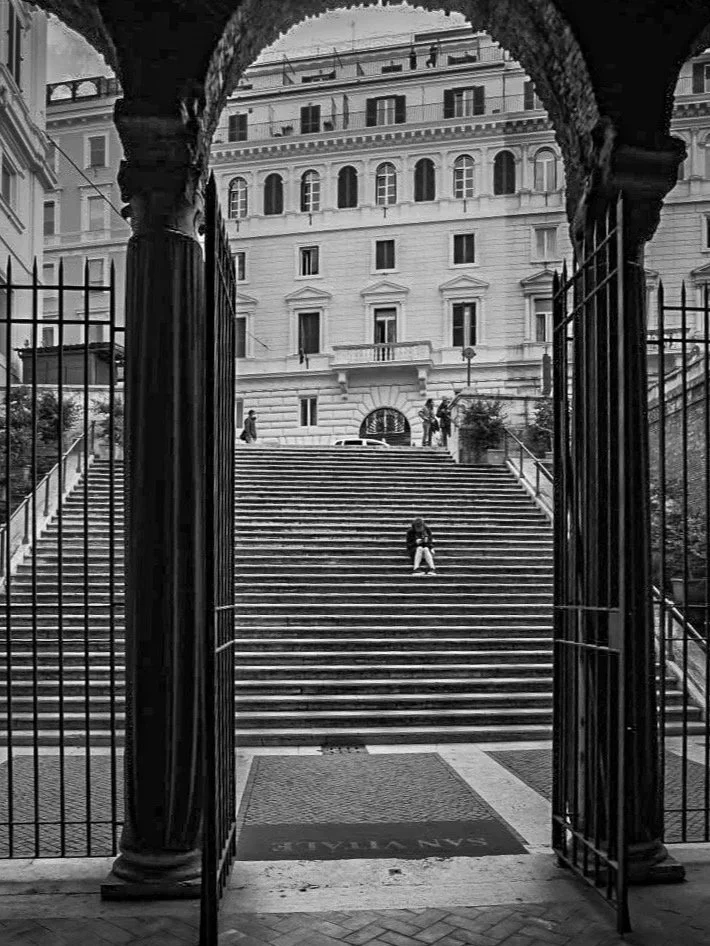
Much like my family, Rome is a city that has never been particularly good at throwing things away. Given we are Italian, maybe this is where we get it from. Buildings get abandoned, streets get raised, churches get demolished, new churches get built on top of old churches, and eventually someone discovers that the basement contains an entire Roman neighborhood. In most cities, this would be considered a significant archaeological problem. In Rome, it is practically an architectural feature that only enhance the city’s charm.
One of the great pleasures of visiting Rome is discovering that the city you see above ground is only the most recent layer. Beneath the streets, churches, department stores, and even some of the city's most famous monuments is another Rome: one of ancient houses, temples, aqueducts, cemeteries, and early Christian churches. If you are willing to descend a staircase or two, you can quite literally walk backwards through history.
And there may be no better place to start than San Clemente.
A Church With a Serious Basement Problem
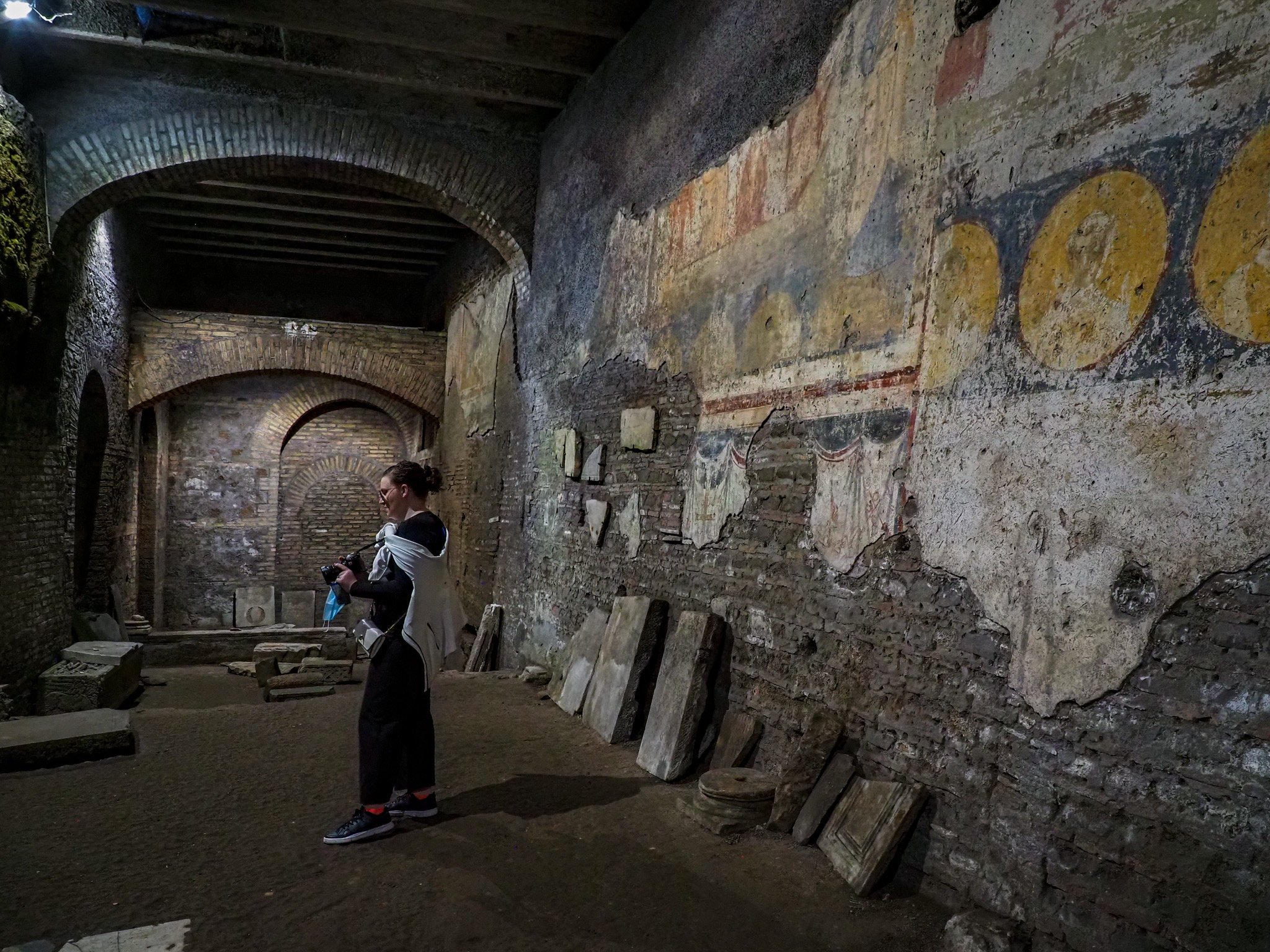
The Basilica of San Clemente near the Colosseum is famous for its beautiful medieval church, but the real fun begins when you start going downstairs. The current 12th-century basilica sits directly above a 4th-century church, which in turn sits above a collection of Roman buildings dating to the first century.
The lower basilica was eventually abandoned and filled with rubble, becoming the foundation for the church above it. Today, you can walk through its partially preserved interior and see an extraordinary collection of medieval frescoes. Keep going down, and things get decidedly more pagan: a Roman house contains a second-century Mithraeum, a temple dedicated to the mysterious god Mithras.
Essentially, San Clemente is what happens when Rome decides that the best way to deal with an old building is to simply build another building on top of it.
The result is one of the most satisfying archaeological experiences in the city. You start in the medieval period, descend into Late Antiquity, and then keep going until you are standing in ancient Rome. It is history told vertically.
A Secret Basement for a Secret Cult
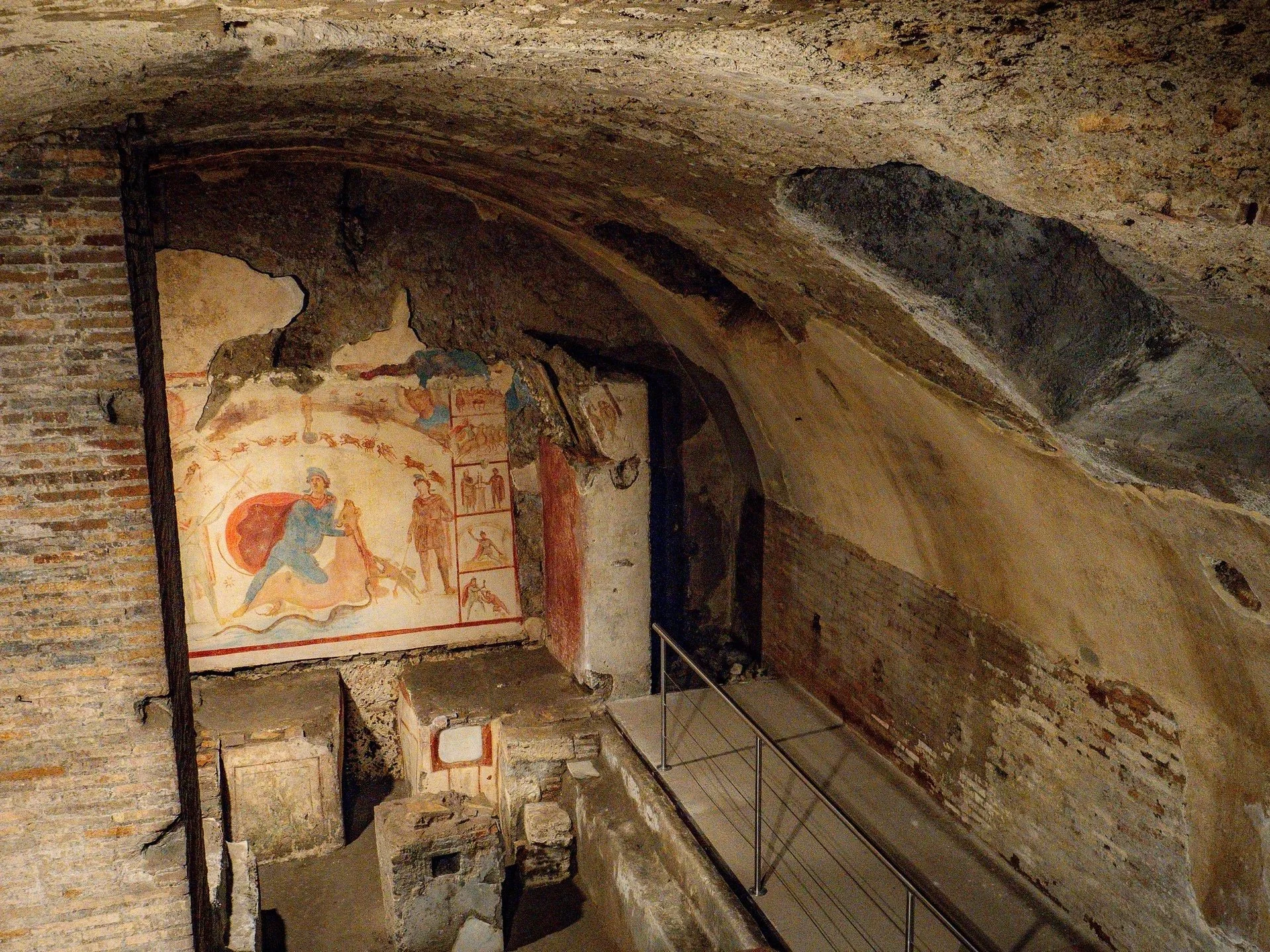
If San Clemente makes Rome's archaeological layering feel almost comically obvious, the Barberini Mithraeum takes the basement concept in a more mysterious direction. Hidden in the garden behind Palazzo Barberini, this small underground sanctuary was discovered entirely by accident in 1936. Dating to the third century, the Mithraeum was dedicated to Mithras, a god associated with a mystery cult that was particularly popular among Roman soldiers. And, appropriately for a mystery cult, the whole thing was designed to be hidden: this was a space accessible only to initiates.
The real star is the fresco decoration. The long, barrel-vaulted room is lined with benches where worshippers likely gathered for rituals and a sacred communal meal, while the walls and back of the sanctuary are covered with scenes from the mythology of Mithras. It is difficult to imagine a more Roman archaeological discovery: you're wandering around the grounds of a seventeenth-century palace and, surprise, there's a third-century secret religious sanctuary underneath it. Rome apparently subscribes to the theory that every property is improved by the addition of at least one ancient mystery cult.
Prada, Gucci, and an Ancient Aqueduct
For an even stranger example of Rome's archaeological layering, head to La Rinascente on Via del Tritone. Yes, the department store.
In the many years I spent much of December in Rome, I adored going to the department store to take in the festive decorations, admire their large ornament and nativity collections for sale, and of course grab a yummy treat from the food hall on the top floor.
The Rinascente's basement contains an exposed section of the ancient Aqua Virgo, the aqueduct built under Marcus Agrippa in 19 BC. The aqueduct is still functioning today, supplying water to some of Rome's fountains, including the Trevi Fountain. During construction of the department store, archaeologists discovered not only the aqueduct but additional ancient structures, including roads, tombs, shops, houses, a luxurious residence, and a small bath complex. There is something deeply amusing about descending beneath a building full of designer handbags and finding yourself face-to-face with a 2,000-year-old Roman aqueduct.
It is also a perfect illustration of why Rome's archaeology can be so unexpected. You don't necessarily have to visit a traditional archaeological site to encounter ancient Rome. Sometimes you just need to go shopping, which I always endorse.
The Case Romane del Celio: Ancient Rome's Fixer-Upper
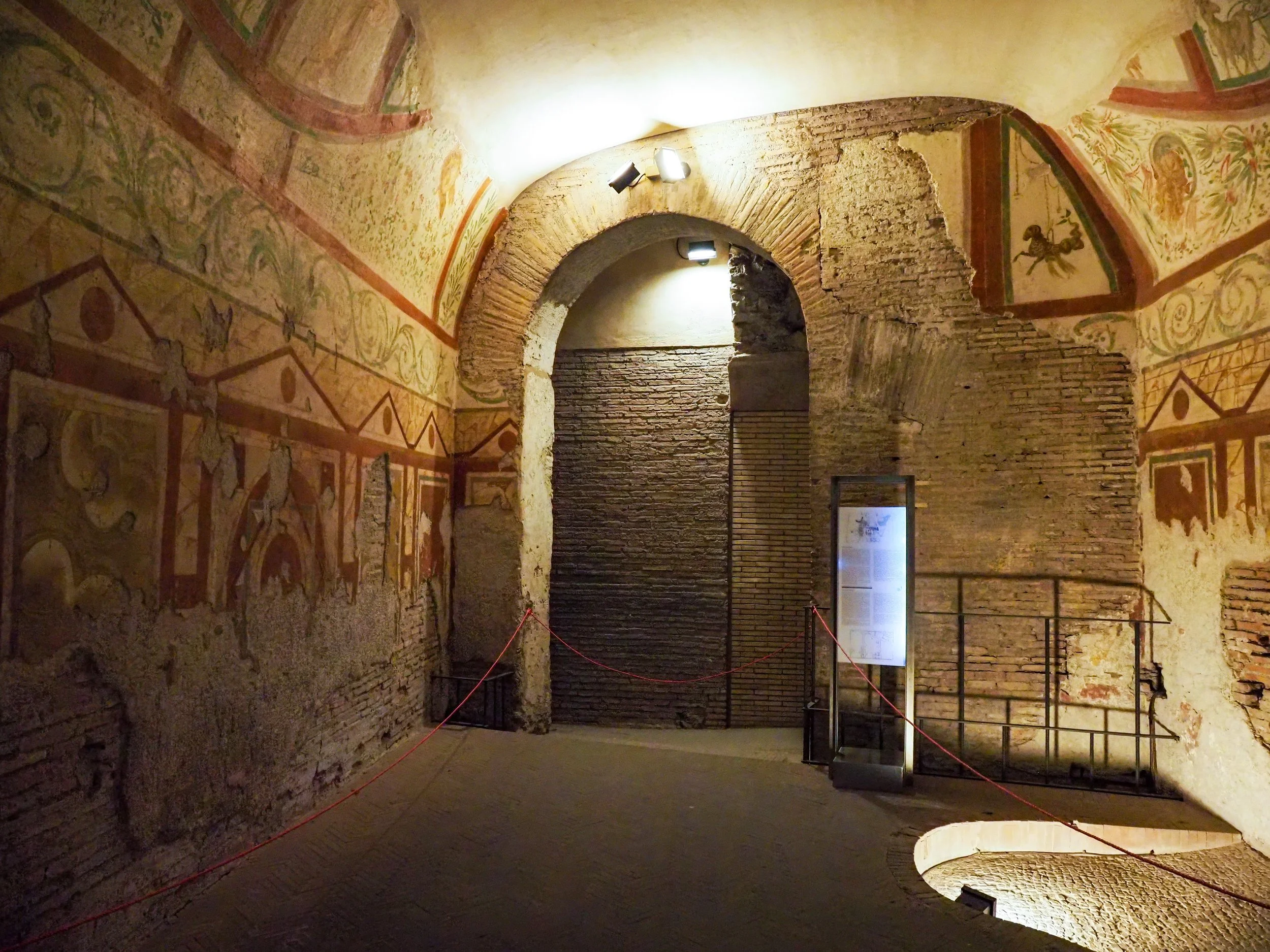
Underneath the Basilica of Santi Giovanni e Paolo on the Caelian Hill are the Case Romane del Celio, a remarkably preserved complex of ancient rooms decorated with frescoes.
The site contains more than twenty underground rooms dating from approximately the first through fourth centuries. What began as shops and working-class apartments was transformed over time into increasingly elaborate domestic spaces, including a luxurious domus with its own private bath. Eventually, the complex became associated with a Christian titulus church, encapsulating the gradual transformation of Rome from a predominantly pagan city into a Christian one.
The frescoes are the real stars here. They range from relatively modest domestic decoration to sophisticated mythological and religious imagery. The site provides a wonderfully intimate glimpse of Roman life because, unlike the monumental ruins of the Forum, these are spaces where actual people lived, worked, ate, and worshipped.
Rome's Original Underground Cemeteries
Then there are the catacombs, which take the concept of an underground Rome in a slightly more literal, and considerably more macabre, direction. They merit a post all their own but for now I will provide a brief overview.
Rome's catacombs were extensive subterranean burial complexes used by both Christians and Jews, particularly from the second century onward. They are not, despite what Hollywood would have us believe, primarily mysterious tunnels in which everyone wandered around carrying torches and looking for secret entrances.
My personal favorite is the Catacomb of Callixtus along the Via Appia Antica. One of the oldest and most important Christian cemetery complexes in Rome, it contains an enormous network of galleries and chambers, as well as the so-called Crypt of the Popes, where several third-century popes were buried.
For me, however, the most compelling aspect of this set of catacombs is the early Christian art. The small burial chambers, often used for wealthy family burials, preserve some of the earliest Christian frescoes in the catacombs, including imagery associated with baptism and the Eucharist.
These paintings are particularly fascinating because early Christians developed a visual language that could communicate complicated theological ideas through deceptively simple images. Christ appears in forms that might not immediately look familiar to a modern viewer, and biblical stories become symbols of salvation, resurrection, and eternal life.
It is a reminder that Christian art did not suddenly appear fully formed in the fourth century. Its visual vocabulary was developing underground, quite literally, while the Roman world above was still changing.
Under the Trevi Fountain: The City of Water
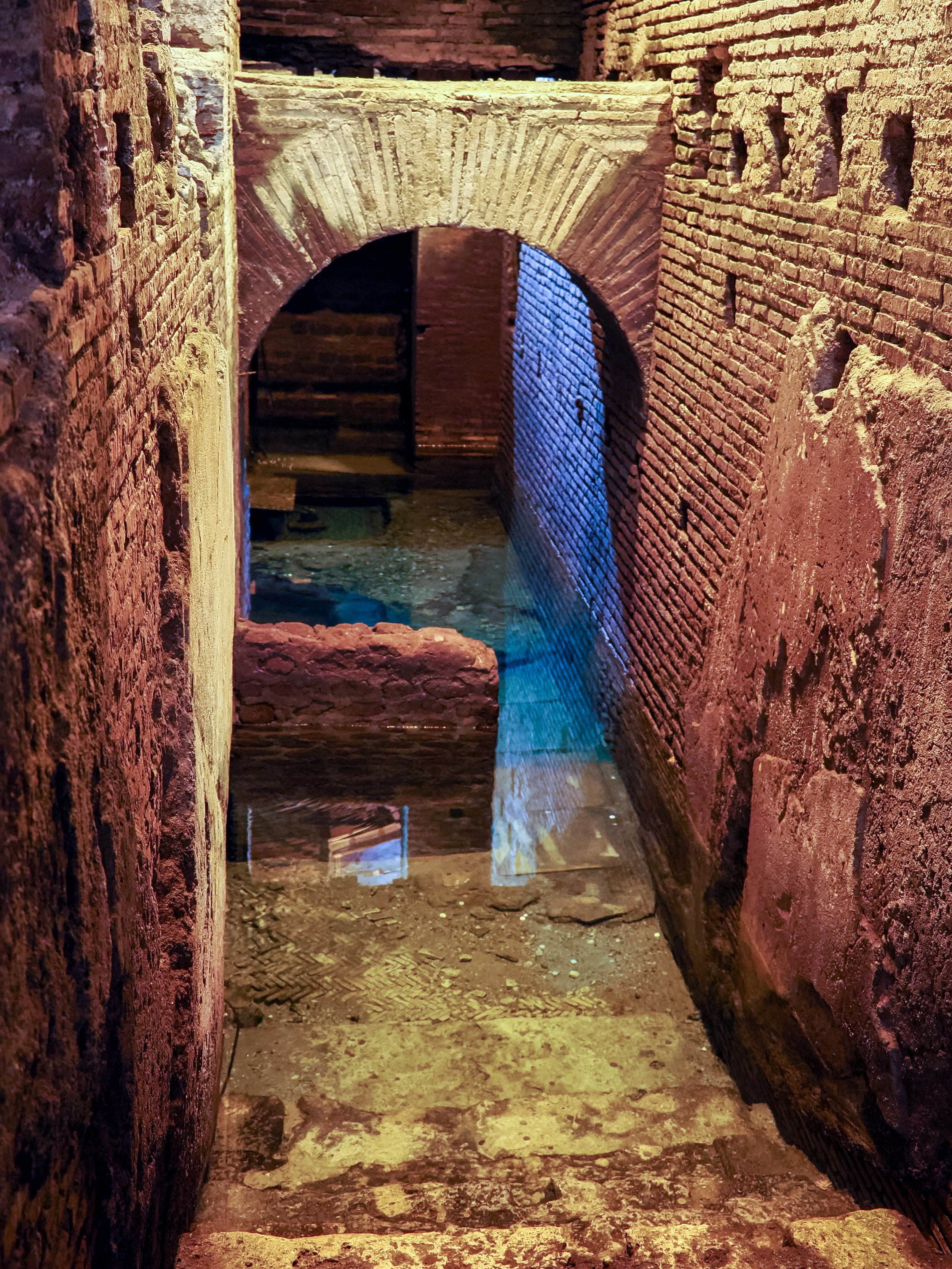
And then there is Vicus Caprarius, perhaps the ultimate example of Rome's tendency to hide archaeology in plain sight.
Just a few minutes from the Trevi Fountain, more than nine meters below today's street level, lies an archaeological complex discovered during renovations to a former cinema between 1999 and 2001. Beneath the modern neighborhood are Roman residential structures, a castellum aquae connected to the Aqua Virgo, and evidence of the complicated water infrastructure that helped keep ancient Rome functioning.
The site is appropriately nicknamed the “City of Water.” Water still flows through parts of the ancient structures, and the complex gives visitors a remarkable look at the infrastructure beneath one of Rome's busiest tourist districts.
So the next time you stand at the Trevi Fountain watching tourists throw coins into the water, remember that there is another world underneath your feet—one involving Roman aqueducts, ancient houses, and centuries of urban archaeology.
Rome is often described as an open-air museum, but that isn't quite accurate. It is more like an archaeological layer cake, except the layers are made of marble, brick, frescoes, tombs, churches, aqueducts, and approximately two thousand years of questionable construction decisions. The best way to experience it is sometimes not to look up at Rome's monuments, but to look down. Just be prepared for the possibility that the basement is older than your country.